
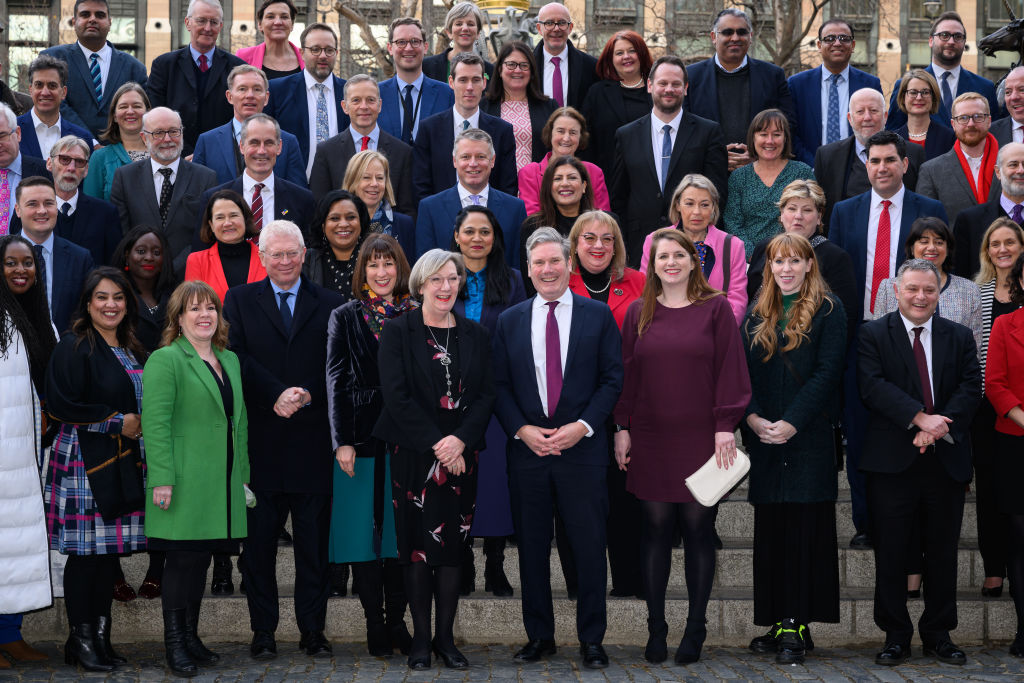
On 16 July 2025, the Labour Party suspended the whip from a group of backbench MPs for their role in the welfare rebellion. Chris Hinchliff, the MP for North East Hertfordshire, and Neil Duncan-Jordan, the MP for Poole were among them.
Sitting in Duncan-Jordan’s lively commons office, decorated with union posters, and vinyl records by The Beatles the pair tell me they “trauma bonded” during their time out in the wilderness; they were re-admitted to the party in November last year. They have since become close friends and colleagues, regularly discussing ideas and chewing the fat together.
Today, they are launching the product of those discussions: Socialism 2026, a new left-wing platform of 15 policies for the Labour movement to adopt. It’s already been backed by more by more than 25 of their colleagues and five affiliated trade unions: Unison, the Communication Workers Union, Transport Salaried Staff’s Association and ASLEF and the Fire Brigades Union.
I spoke to the pair this week as Keir Starmer was clinging on for his political life. Parliament was still prorogued, and the corridors of the Palace of Westminster were empty. Duncan-Jordan had only just got off the train. On the way up from Poole his phone had been pinging with messages from colleagues some who were choosing to back Catherine West’s letter, some who were not and others who had been switching between the two options.

Hinchliff and Duncan-Jordan like the idea of Andy Burnham as a potential prime minister, although he remains outside of parliament and they are not explicitly backing him. Instead of being a vehicle for an individual leadership bid Socialism 2026 has been set up with the intention of creating a checklist of sorts, which left-wing MPs can use to assess which candidate to throw their weight behind.
“We’ve not got a horse in the race,” Hinchliff said, “we recognise from or position within the Parliamentary Labour Party, we’re not going to be a determining factor in the leadership.” He explained that instead, he and Duncan-Jordan hope this platform will “mobilise the Labour movement around progressive policies” they think will “secure an improvement” for their constituents’ lives.
The fifteen policies are set out in three parts: five for now, five for before the next election and five for the manifesto. They include short-term measures such as scrapping the government’s reforms to jury trials, introducing emergency measures to keep down energy bills and recognising the genocide in Gaza, as well as longer-term asks like reforming the tax system, or nationalising water. Duncan-Jordan described them as “mainstream Labour stuff”.
The pair hope their platform will change the culture of the Labour Party. The 12 founding signatories of Socialism 2026 are all members of the 2024 intake of MPs. A further 16 MPs who were elected before that time are supporting signatories.
“The 2024 intake I think are particularly nervous of putting their name to anything,” Duncan-Jordan said before Hinchliff added, “it was drilled into us from the get-go don’t put your name to anything.” The pair are more forthright, being among 85 MPs who have called for Starmer’s departure since Labour’s catastrophic performance in the local elections.
Hinchliff and Duncan-Jordan are both deeply critical of the party’s treatment of its backbenchers. As part of their new platform, they have called on the government to immediately “stop using the suspension of the whip as a threat and embrace the democratic value of debate”.
When I ask them about internal culture, both MPs seem galvanised by the thought that things might change. They blame it for many of the mistakes this government has made along the way, such as the winter fuel payment, the appointment of Peter Mandelson and initial refusal to lift the two-child benefit cap.
“For a significant amount of this Parliament, it has felt like the leadership at the top of the party, their ideal scenario would have been for backbenchers to have been elected, and then for everyone to give a proxy vote to the whips and spend all of their time knocking on doors in their constituencies”, Hinchliff said.
He added: “If [the government] had a more open, listening culture that was less defensive and more willing to take criticism as part of being a team player, rather than something you’re doing to cause trouble, then we probably could have sidestepped some of the errors along the way.”
The local election results has made this more urgent. Hinchliff and Duncan-Jordan’s answer to this is drawing the party back to its roots – to rejuvenating its image into one that is more traditionally ‘Labour’. That is why the unions are involved.
For now, the pair have decided that Socialism 2026 will just be a policy platform which MPs and affiliates can put their name to, rather than a formal parliamentary caucus. It does not have a financial backer: Duncan-Jordan and Hinchliff have paid for the website themselves. But there are hopes that this might be something that comes in the future.
When I ask them if they are worried that doing something like this could see more pushback from the party, and even the loss of the whip once again, Hinchliff replied: “I think we’re past that now.” They feel that the situation at the top of the party is so dire that they have to do something. “What’s the point of sitting on our hands and being worried,” Hinchliff said.
No leadership contest has been called yet. When it does happen, and candidates such as Burnham, Rayner or Streeting begin to put themselves forward, Hinchliff, Duncan-Jordan and the signatories of Socialism 2026 will be ready to put them to the test.
Here’s the list of Socialism 2026 signatories in full:
Founding signatories:
Dave Calfe, general secretary of ASLEF
Andrea Egan, general secretary of UNISON
Maryam Eslamdoust, general secretary of TSSA
Dave Ward, general secretary of CWU
Steve Wright, general secretary of FBU
Lee Barron MP
Lorraine Beavers MP
Chris Bloore MP
Neil Duncan-Jordan MP
Cat Eccles MP
Chris Hinchliff MP
Terry Jermy MP
Peter Lamb MP
Brian Leishman MP
Simon Opher MP
Richard Quigley MP
Steve Witherden
Supporting signatories:
Paul Fleming, general secretary of EQUITY
Paula Barker MP
Apsana Begum MP
Richard Burgon MP
Ian Byrne MP
Lord Bryn Davies
Mary Foy MP
Barry Gardiner MP
Lord John Hendy
Kim Johnson MP
Ian Lavery MP
Rebecca Long Bailey MP
Rachael Maskell MP
Andy McDonald MP
John McDonnell MP
Nav Mishra MP
Lord Prem Sikka
Bell Ribeiro-Addy MP
Jon Trickett MP
Nadia Whittome MP
[Further reading: Five ministers would have lost seats if locals were a general election]
Content from our partners



Related
Join the debate
Subscribe here to comment